Filmic Performance Lecture and Film Screening
Eye of the Mountain. Counternarratives of the Borderlands
2.12., 19:00
Free admission
Filmic Performance Lecture by Melanie Manchot and Matěj Strnad as well as Film Screening by Rosa Barba, Barbora Mrázková and Shanta Nepali. Curated and moderated by Hana Janečková
The event Eye of the Mountain examines mountains as a liminal space, where alternative notions of time and movement emerge through geographical shifts, historical trauma and the climate emergency. The programme is brought together by artist and filmmaker Melanie Manchot; film historian, theorist, and curator Matěj Strnad (Národní filmový archiv, Prague) and art historian and curator Hana Janečková (Academy of Visual Arts, Prague). Grounded in extensive artistic research the programme traces conflicted Cold War histories inscribed into mountains and expeditions, lithium mining on the Czech-German border, and more broadly relationships between earth rights and memory, community and grief. In doing so, it offers counter-stories to human-centred understandings of mountains, foregrounding ecological perspectives as alternatives to prevailing narratives of conquest, extraction and coloniality.
Hana Janečková is a researcher, writer, and curator based at the Academy of Visual Arts (AVU) in Prague. She is the curator of Duane Linklater and Tanya Lukin Linklater at the Galerie Rudolfinum and was the curator of the Czech Pavilion at the 60th Venice Biennale. Her monograph Beyond the Body: Feminist Alliances in Contemporary Art is out in December 2026.
One Day as a Tiger
A new Filmic Performance Lecture by Melanie Manchot and Matěj Strnad, 50 Min, followed by a Q&A by Hana Janečková
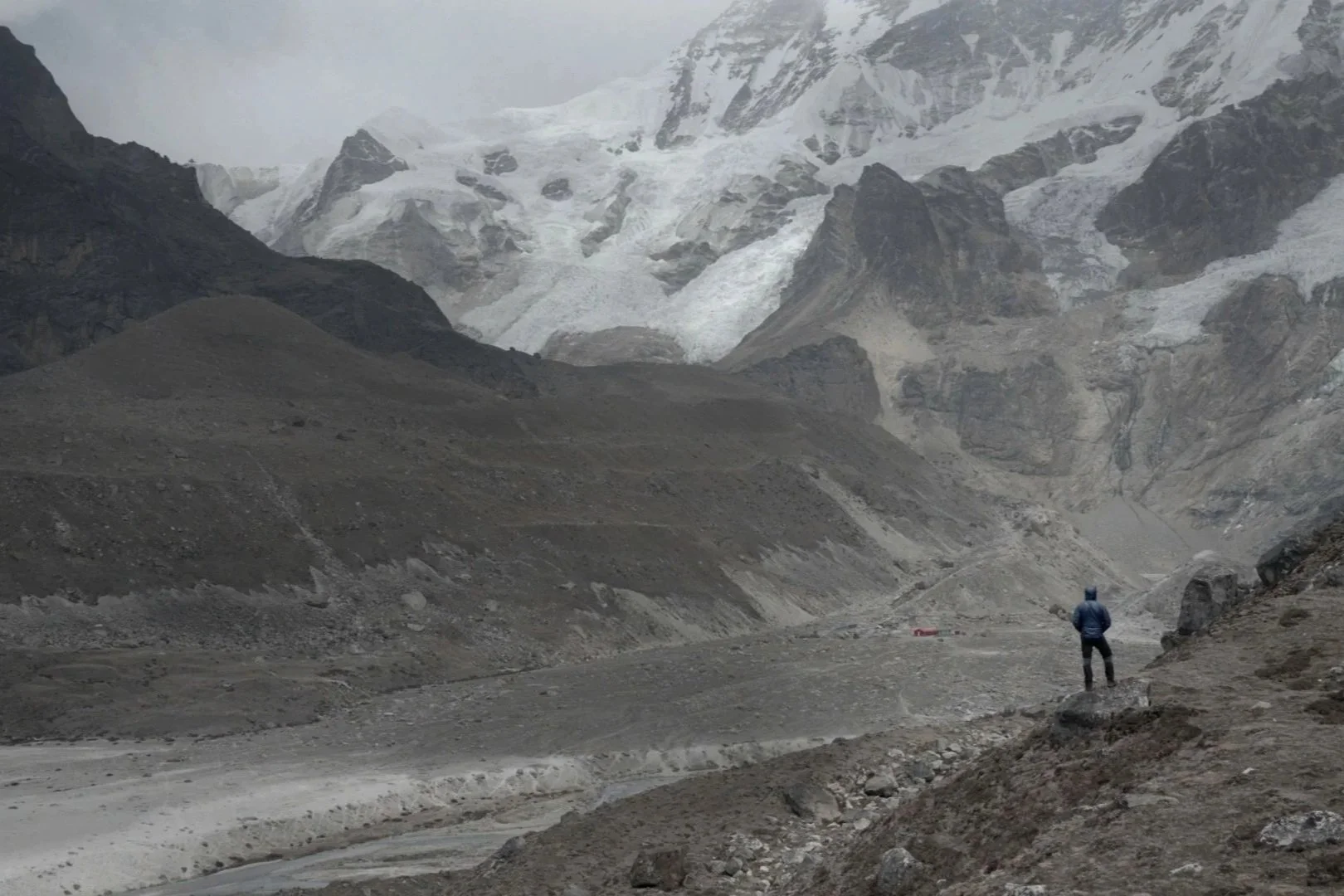
In May 2026, it was fifty years since Melanie Manchot’s half-brother, Karel Schubert, became the first Czech climber to reach the summit of Makalu, one of the highest mountains in the world. He never returned. In May 2026, Manchot travelled to Makalu, retracing Karel’s steps. Bringing materials collected in the Himalayas together with Matěj Strnad’s research into rare film materials from Czech and Slovak archives, the new performance-lecture for KINDL deploys speculative storytelling as a dynamic narrative method, connecting mountains to questions of identity formation, ecological crisis and historical trauma.
Melanie Manchot is an internationally recognised, London-based German artist working across film, photography, and performance as part of a participatory practice that foregrounds performance to camera. Often working with groups or communities, her film work has increasingly operated at the intersection between documentary and fiction, creating expanded portraits of people and their life experiences.
Matěj Strnad is an audiovisual archivist, lecturer, and archival producer. He works as the Head of the Curatorial Department at the Národní filmový archiv, Prague (NFA), where he leads curatorial work across acquisition, restoration and presentation projects. Independently he also consults archival projects, having collaborated with institutions such as the National Gallery Prague and the Vašulka Kitchen Brno. From 2020-2026 he served as the Head of the Programming and Access Commission of FIAF, the International Federation of Film Archives.
Dhye Dreams
Shanta Nepali, (2023), (20 Min, Nepali and Tibetan with English subtitles)
Dhye Dreams explores the lives of three women – Sonam Sangmo, Kunchok Dolkar, and Lhakpa Choezon – in the remote Tibetan villages of Upper Mustang Nepal. Climate change has desiccated the landscape and the water table has dropped drastically, forcing the abandonment of the ancient village of Dhye. Most of the villagers have moved to the new frontier town of Chambaleh, but Kunchok and Lhakpa choose to remain in the mountains with their livestock and fields. Their stories highlight the resilience and struggle for the survival of isolated Himalayan villages battling against dramatic climate change.
Shanta Nepali is a Kathmandu-based director, producer, and cinematographer whose lived experiences inspire her commitment to amplifying marginalized voices through film. She received the 2023 John B. Oakes Award for Distinguished Environmental Reporting.
Sky Does Appear to be Falling
Barbora Mrázková, (2023), (12 Min, Czech with English subtitles)
Sky Does Appear to be Falling documents the story of the Cínovec mountain on the Czech German borders, site of a lithium deposit from which millions of tons of ore are planned to be extracted. It is narrated through both the PR perspective of international corporation which is contrasted by the artist’s research into the corruption accompanying the sale of the public land to private ownership.
Bára Mrázková is a Prague-based visual artist and educator. Her work investigates the hidden processes behind the production of contemporary photographic images, focusing on the mining and processing of rare minerals used in the electronic devices that allow these images to appear.
Outwardly from Earth's Center
Rosa Barba, (2007), (23 Min, English and Swedish with English subtitles)
As one of the early films about climate change, Outwardly from Earth's Center depicts a fictitious society on an unstable piece of land in danger of disappearing, requiring a collective initiative in order to ensure individual and societal survival. The fictional setting references Gotska Sandön, a Swedish island in the Baltic Sea which moves approximately one meter a year. Initially develops into a more abstract and absurd picture of the inhabitant’s struggles and vulnerability.
Rosa Barba is an Italian visual artist and filmmaker based in Germany. Through installation, sculpture and publications, her works use speculative fiction and the materiality of film to inquire into the ambiguous nature of reality, memory, landscape.
In English
Free admission
Supported by the Deutsch-Tschechischen Zukunftsfonds